
A mini case study
"Renew! Renew! Renew!" - My role at Paychex
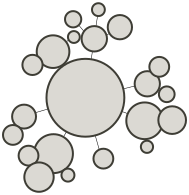
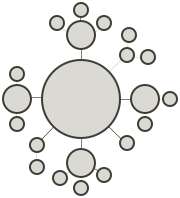
Focusing first on the small, then scaling to the large. Paychex made the bold decision to completely rebuild their proven, but poorly ageing platform to a user-first, modern, HTML5-based experience. To rebuild this complex and massive set of solutions, the focus would first be on the simpler needs of small businesses, then scale up to the needs of larger and larger businesses.
I was brought-on to scale the experience, but not diminish ease-of-use, elegance, and power.
1
A massive, complex, and poorly ageing system; but one that is reliably serving all manner of business types
2
Experience is rebuilt, & re-imagined, w/ focus initially on small businesses (relieving the pressure to attain feature parity with the legacy system)
3
Scaling & building tailored experiences for different types of businesses, all while maintaining ease-of-use

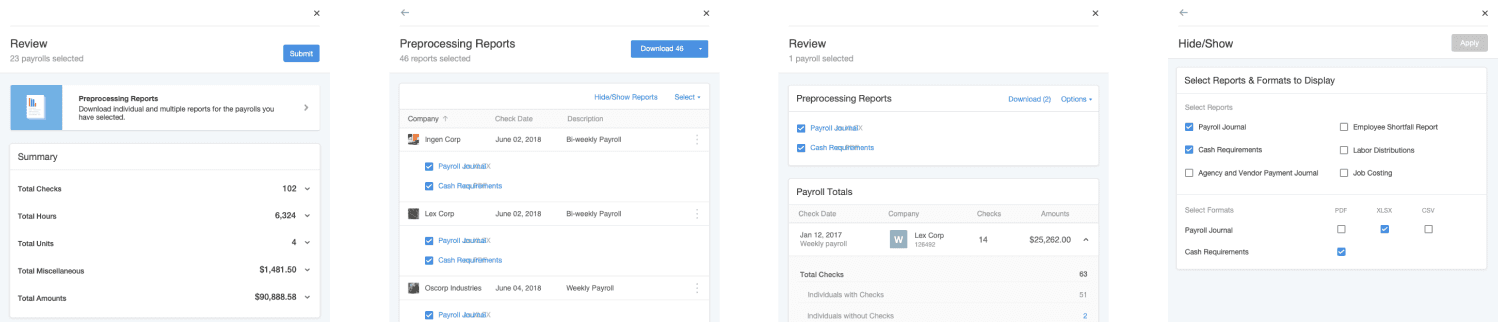
An example of scaling our revamped experience for larger businesses
In the payroll world, preprocessing reports are generated to:
- Review accuracy and completeness of the payroll before submission
- Obtain initial information on the total cost the client will need to ensure is available to fund the payroll
I was brought on the bring this critical functionality to those running payroll for multiple teams/divisions/departments and even multiple clients. Processing takes time, and users need reports in various formats.
All these variables would need to be presented in a managable, digestable way.

Outcome
- Average NPS increase of 12 points among those using new functionality
- Average time savings of 3 hrs per pay period
- Allowed an extra 7% of existing customers to move away from the legacy experience
- Nearly 20% less payroll errors and 35% reduction in customer support calls for target audience
Mapping needs and scenarios, and reviewing these artifacts with others
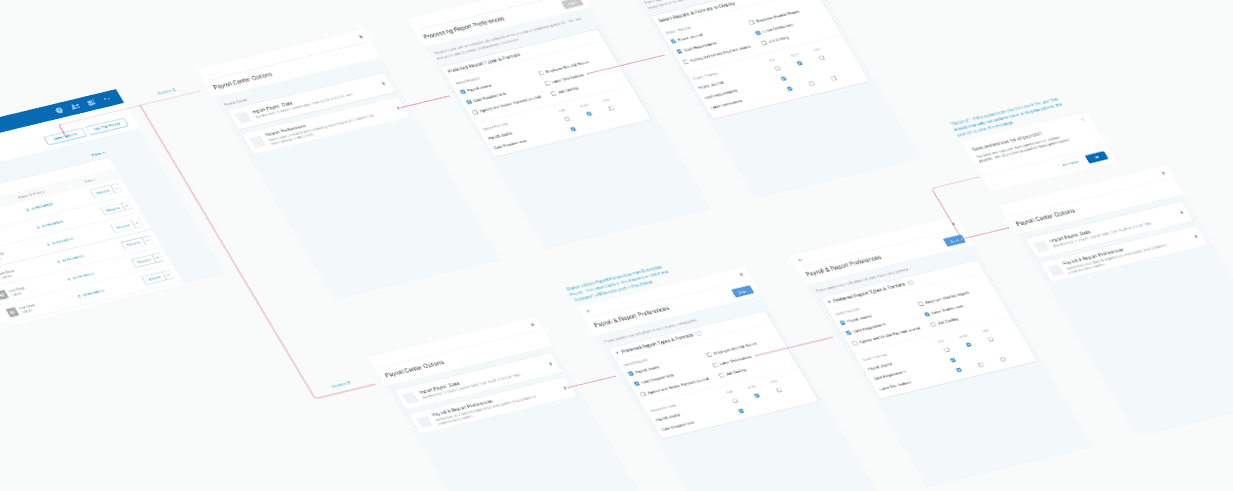
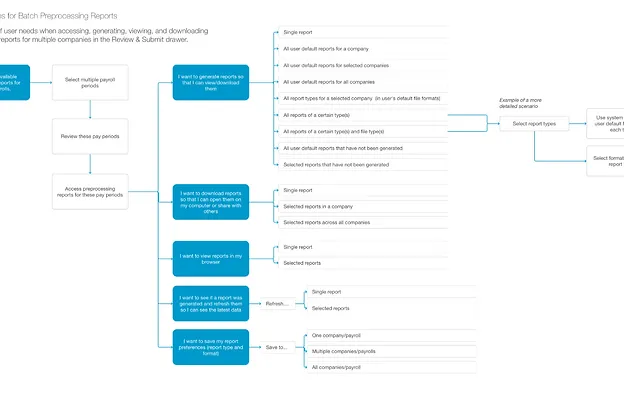
User needs are the foundation of any valuable solution. Needs were gathered from existing work of product managers, interviews/surveys with users, and interviews with subject matter experts. Existing use scenarios were mapped and new scenarios were created for potential solutions.
Most importantly, these new scenarios are reviewed with engineering to understand what backend services will be needed, general time frames of processing, error handling, and where the flows might need to be changed based on feasibility and capabilities.
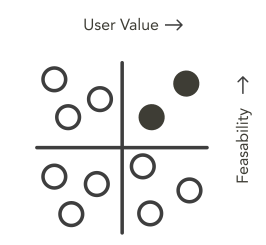
Focusing the experience on high value & high feasibility solutions
The highest value potential solutions rang through clearly from interviews, surveys, usage analytics, and customer support. Our user most wanted...
- Powerful batch creation of reports across multiple divisions/companies/etc
- Ability to specify the format of each report (important if data needs to be presented vs. imported for use in another program like Excel)
These high value solutions were discussed with engineering teams to understand their feasibility and what we should attempt to build in our first and subsequent releases.
Adapting the experience to backend capabilities & evolving requirements
Consistent and clear collaboration with enginerring teams and other product managers ensured we knew early and often when I designed solution needed to pivot based on system contraints.
For instance, processing complex report required more time, and we wanted to the user to be able to do other things while waiting.

Focusing the experience on high value & high feasibility solutions
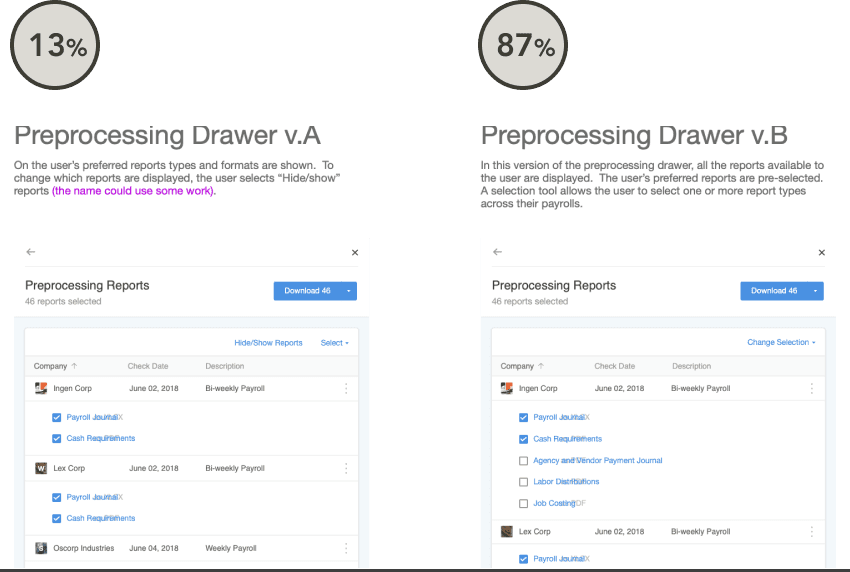
Testing and rapid iteration were built into the design process and ultimately led to more successful solutions (and less churn or wasted work).
In this example, 87% of users preferred seing all available reports rather than just those they had previously run, so the design choice was clear.
Final implementation
What was once a highly complex process in the old system became a relatively simple, but powerful batch process for generating reports that are critical to payroll's many functions.